

Almost everyone associates dead batteries with cold mornings. You turn the key in December, hear that slow labored crank, and blame the temperature.
The cold gets the blame, but the heat did the damage months earlier. That’s exactly why fall, not winter, is when you should be checking.
Why summer is the real culprit
A battery makes electricity through a chemical reaction happening inside it. Heat speeds that reaction up, and over a long hot summer that extra activity wears out the parts inside and dries out the liquid they sit in. A battery that spent July and August under the hood of a car parked on Franklin asphalt has damage it will never recover from.
Here’s the part that catches people. A warm battery actually delivers power more easily, so all that damage stays hidden through the summer. Your car starts fine. Then the first genuinely cold morning arrives, the chemical reaction slows down the way it does in cold weather, and the strength that summer quietly took away suddenly isn’t there when you need it.
That’s the whole story behind most winter no-starts. The failure happens in January. The cause happened in August.
Fall is your window
Right now you’re in the stretch where the damage has already been done but the weather hasn’t exposed it yet. A battery test in September tells you what a jump start in January would have told you, except you get to handle it on your own schedule instead of standing in a parking lot.
In this climate, three to five years is a realistic battery life. Some last longer. Plenty don’t make four. If yours is past three years, it’s worth testing rather than assuming.
Signs yours is already struggling
Slow cranking is the obvious one, where the engine turns over lazily before it catches. There are earlier hints too.
Headlights that dim when you’re stopped and brighten when you press the gas. Dashboard displays that reset themselves or act strangely. White or crusty blue-green buildup on the metal posts on top of the battery. A battery case that looks swollen or bulged, which is almost always a sign of heat damage.
If you’ve needed even one jump start this year, that’s your battery telling you plainly what’s coming.
It might not be the battery at all
This is where a real test matters rather than just swapping in a new battery and hoping.
A battery that keeps dying can mean the battery is worn out. It can also mean the alternator, which is the part that recharges the battery while you drive, has stopped doing its job. Or it can mean something in the car is quietly drawing power after you shut it off and walk away.
In either of those last two cases, a new battery just means you’ll be back in a few weeks with a new dead battery and the same problem.
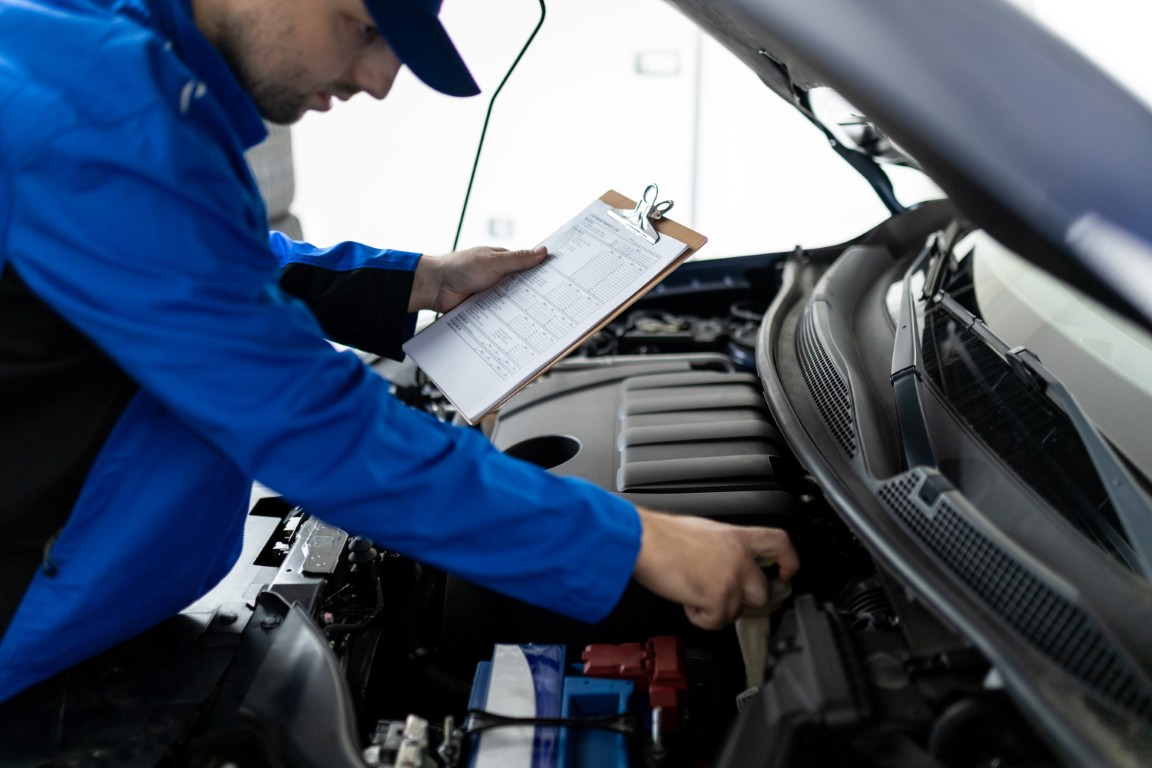
We test the battery, the alternator, and the starter together, because those three parts work as one system and a problem with any of them looks similar from the driver’s seat. If something is draining power overnight, we track down what it is instead of guessing.
A charging system problem sometimes shows up as a battery light on your dash, but not always. Often the only symptom is a battery that won’t stay charged.
Short trips make it worse
Starting an engine uses a lot of stored power, and it takes a stretch of steady driving for the alternator to put it back. A daily routine of five-minute errands around town can leave a battery permanently under-charged, which shortens its life on its own. If that describes how you drive, get tested more often rather than less.
A few minutes now saves a cold morning later
A battery and charging system test takes only a few minutes, and it’s included in our complimentary inspection. Knowing where you stand before the weather turns beats finding out the hard way.
If you’re planning any fall travel, this is worth doing before you go. Our post on getting your car ready for a trip covers the rest of the list.
Read more: Leaf Season and Holiday Travel: Get Your Car Checked First
Schedule Your Service at Franklin Automotive
Franklin Automotive has served Franklin, Brentwood, Cool Springs, Spring Hill, Columbia, and Leiper’s Fork since 1999. We’re a family-owned NAPA AutoCare Center with ASE-certified technicians, and every qualifying repair is backed by our 3-year / 36,000-mile warranty. We also offer a free shuttle and complimentary inspections.
Call (615) 472-8052 or visit us at 307 5th Ave N, Franklin, TN 37064. We’re open Monday through Friday, 7:00 AM to 5:00 PM.

[…] Read more: Your Battery Survived Summer. Will It Survive November? […]
Comments are closed.