
Nobody gets excited about a serpentine belt. It’s a strip of rubber that costs a fraction of what most repairs cost, and it does its job for years without asking for anything.
Then it breaks on Highway 96 in January and takes several things down with it at once. Your battery stops charging, your steering gets heavy, and in many cars the pump that circulates coolant quits, so the engine starts overheating on top of everything else.
The pattern worth understanding is that heat causes the damage and cold triggers the failure.
Why fall is the right time to look
Rubber breaks down from heat. The temperatures under your hood through a Tennessee summer age belts and hoses faster than anything else they go through. By September, a belt that started the year in good shape may be cracked and running on borrowed time.
Then cold weather arrives. Rubber gets stiff as temperatures drop, which means it flexes less easily and takes more stress every time it bends around a pulley. A belt that was marginal in October snaps in January on a cold morning, when the engine is stiff and everything is working hardest to turn over.
That’s why breakdown calls for broken belts pile up in winter even though the wear happened months earlier. Fall is the window between the damage and the consequence.
What to look for on a belt
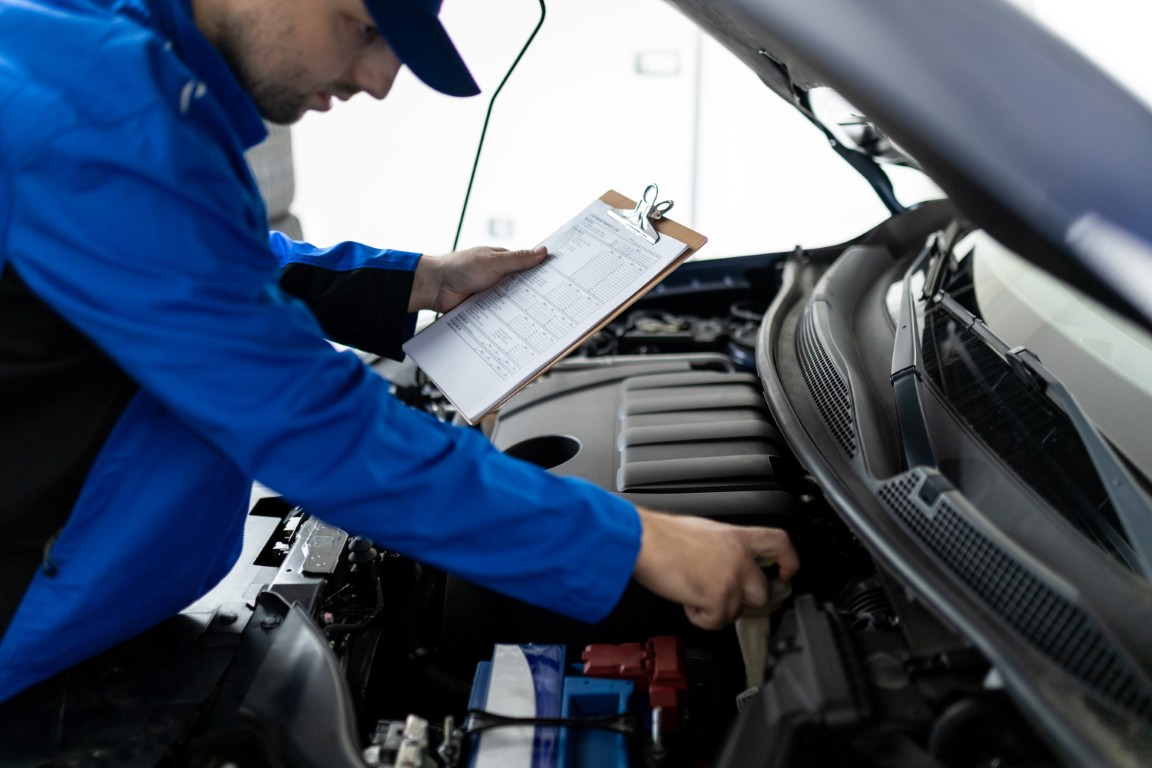
Pop the hood and look at the ribbed side of the belt, the side with the grooves that grip the pulleys. You’re looking for cracks running across those grooves. A few fine ones are normal on an older belt, but deep cracks or a lot of them mean it’s time. A shiny, polished look on the ribs means the belt has been slipping. Missing chunks or frayed edges mean replace it now rather than soon.
A squeal when you first start the car, or when you turn the steering wheel hard, is the belt telling you it’s losing its grip. That squeal shows up more often as the weather cools, which is why people write it off as a cold-weather quirk. It’s a worn belt, and cold is just making it obvious.
What to look for on hoses
Check these when the engine is completely cool, never when it’s hot. A good hose feels firm and springs back when you squeeze it. One that feels soft and spongy, or unusually stiff and brittle, has broken down inside.
Look for swelling near the metal clamps at either end, cracking where the hose bends, and a chalky, powdery texture on the surface.
One thing you can’t see from outside: hoses often fail from the inside out. A hose can look perfectly fine while the lining inside has crumbled and is shedding bits into your cooling system, where they collect in the radiator and block the flow.
Don’t skip the part that holds the belt tight
The belt is kept tight by a spring-loaded pulley called a tensioner. When that tensioner gets weak or its bearing wears out, the belt slips or wears unevenly, and a brand new belt on a worn tensioner will fail early.
Replacing a belt without checking the tensioner is one of the more common ways this job ends up getting done twice. We check the tensioner and the other pulleys the belt runs over as part of the same job.
When to replace
Most manufacturers put belts somewhere in the 60,000 to 100,000 mile range, with hoses in similar territory. Condition beats mileage every time, though. A belt on a car that idles a lot in hot weather wears differently than one on a highway car up north.
The practical answer is that we look at both every time a car is on our lift, and it costs you nothing to find out where yours stand.
Cheap now, expensive later
This is one of the clearest cases in auto repair where replacing something before it breaks saves real money. Belt and hose work is a modest job. A tow truck, an overheated engine, and the repair that follows is not.
Schedule Your Service at Franklin Automotive
Franklin Automotive has served Franklin, Brentwood, Cool Springs, Spring Hill, Columbia, and Leiper’s Fork since 1999. We’re a family-owned NAPA AutoCare Center with ASE-certified technicians, and every qualifying repair is backed by our 3-year / 36,000-mile warranty. We also offer a free shuttle and complimentary inspections.
Call (615) 472-8052 or visit us at 307 5th Ave N, Franklin, TN 37064. We’re open Monday through Friday, 7:00 AM to 5:00 PM.